
What recent restaurant projects taught us about protecting opening weekends and revenue
For restaurant owners, the opening date is not a suggestion, it is tied to marketing, staffing, and real revenue. Through recent restaurant projects in the Wilmington area, Nipper Construction has seen the impact of treating the opening date as the starting point for every construction decision, not an afterthought. Below are three practical lessons owners and design teams can apply to future hospitality work For restaurant owners, the opening date is not a suggestion, it is tied to marketing, staffing, and real revenue. Through recent restaurant projects in the Wilmington area, Nipper Construction has seen the impact of treating the opening date as the starting point for every construction decision, not an afterthought. Below are three practical lessons owners and design teams can apply to future hospitality work.Start with the opening weekend and work backwards
Every restaurant project should begin with one question: “When do you need to be open?” From there, the schedule should be reverse-engineered to account for permitting, inspections, long-lead equipment, finishes, and punch list. When Nipper builds a restaurant schedule, we:- Confirm lease dates, rent commencement, and any landlord milestones that affect the path to opening.
- Map out health and fire inspections, including re-inspection windows, so they are not left to the last minute.
- Build realistic buffers for delivery delays and final adjustments rather than assuming best-case scenarios.
Coordinate kitchen equipment and utilities early
Kitchen equipment, hoods, grease traps, and utilities can make or break a restaurant schedule. Late decisions or missing information in these areas quickly translate into lost time and cost. On recent projects, Nipper has seen that coordinating these items early with the design team and vendors pays off later in a smoother closeout. Key moves:- Verify power, gas, and plumbing requirements for every major piece of kitchen equipment.
- Confirm hood, exhaust, and fire suppression requirements with the correct authorities before framing or ceiling work is finalized.
- Align vendor deliveries with the construction schedule so that equipment arrives when the space is ready, not months too early or weeks too late.
Protect staff training and soft-opening time
Owners need more than a completed punch list, they need time to train staff, load inventory, test systems, and run soft openings. On hospitality work, Nipper treats that training window as part of the schedule, not as something the owner has to “fit in” after construction. What this looks like in practice:- Blocking out one to two weeks before opening for training, systems testing, and soft openings, depending on the project.
- Sequencing final inspections and punch list work to avoid interfering with staff training in key areas.
- Communicating clearly with owners about when they can safely start planning soft-opening events and promotional pushes.
If you are planning a restaurant or hospitality project, talk with Nipper about building a schedule that starts with your opening date and protects your first weekends of revenue.
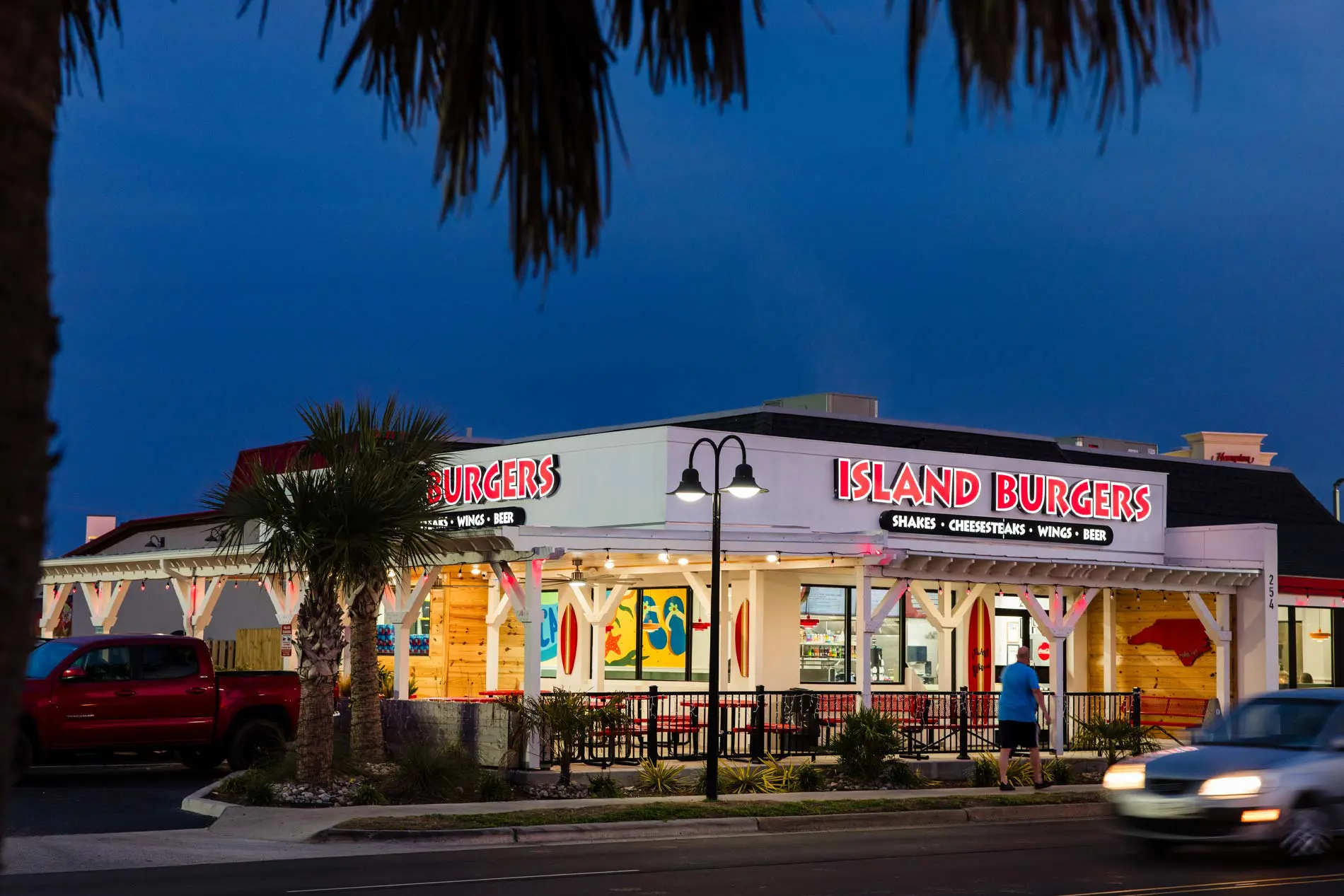
See how these lessons played out on Island Burgers, and learn more about Nipper’s restaurant and commercial general contracting. Planning a similar project? Contact Nipper Construction or call (910) 399-1499.